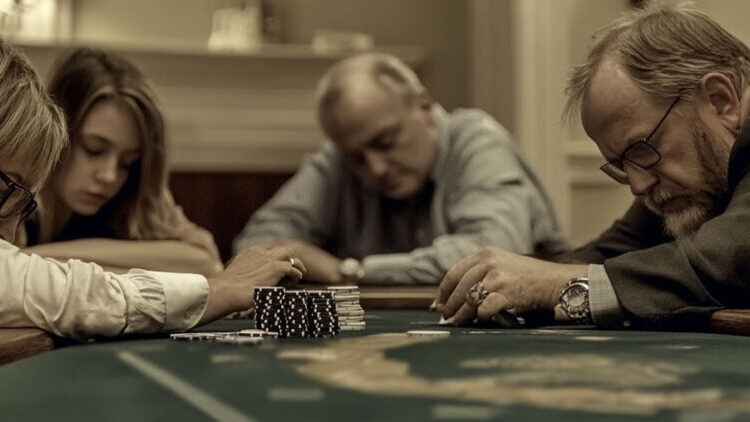

The green felt of a poker table is more than just a surface for dealing cards and stacking chips. Over the decades, it has served as a global stage for incredible displays of human psychology, mathematical genius, and sheer audacity. The evolution of poker from the smoke-filled backrooms of Texas to the neon-drenched arenas of Las Vegas and the digital realm of the internet is a uniquely fascinating narrative. This journey is marked by specific, unforgettable moments that transcended the game itself, turning skilled card players into international celebrities and reshaping the industry overnight.
To truly understand the modern landscape of this enduring game, one must look back at the historic hands, the legendary comebacks, and the cultural shifts that built it. From miraculous recoveries to multi-million-dollar bluffs, the history of poker is written in moments of intense, high-stakes drama.
The Spark That Ignited a Global Boom
If there is a definitive before-and-after marker in the timeline of international poker, it occurred in the summer of 2003. The game was popular before this point, but it was largely dominated by a closed fraternity of seasoned professionals. That all changed when an accountant from Tennessee arrived in Las Vegas.
Chris Moneymaker’s 2003 WSOP Victory
The story of Chris Moneymaker reads like a Hollywood script. An amateur player who had never played in a live tournament before, Moneymaker earned his $10,000 entry fee to the World Series of Poker (WSOP) Main Event by winning an $86 online satellite tournament. Armed with little more than a pair of wrap-around sunglasses and an incredibly fitting surname, he navigated through a field of 839 players, outlasting some of the most feared professionals in the world.
The climactic moment came during heads-up play against seasoned high-stakes professional Sammy Farha. Moneymaker executed what became known as the “Bluff of the Century,” pushing all his chips into the middle with nothing but King-high, forcing Farha to fold a winning hand. Moneymaker went on to win the championship and $2.5 million. This single event triggered the Moneymaker Effect, an unprecedented global surge in poker popularity. Millions of amateur players realized that with a little bit of luck and the right strategy, anyone could compete for life-changing money, birthing the modern online poker industry.
Legends of the Old Guard
Long before internet qualifiers arrived on the scene, poker was defined by road gamblers and mathematical pioneers who built the foundation of Texas Hold’em. These players created legends out of thin air, relying on instinct, bankroll management, and an uncanny ability to read their opponents.
Jack Straus and the Miracle Chip
The phrase “a chip and a chair” is the most enduring idiom in poker, symbolizing the idea that as long as you have a single chip left, you are still in the tournament and capable of winning. This phrase was born in 1982, courtesy of Jack Straus.
During the WSOP Main Event, Straus believed he had lost all his chips in a massive pot. He stood up, put on his coat, and prepared to leave the casino. However, as the dealer gathered the chips, a single $500 chip was discovered hidden beneath a napkin on the table. Because he had not explicitly declared that he was “all-in,” tournament directors ruled that Straus was still alive in the event. With a renewed sense of purpose and a massive stroke of luck, Straus sat back down, aggressively rebuilt his stack, and miraculously went on to win the entire world championship.
Johnny Chan’s Cinematic Masterpiece
In the late 1980s, Johnny Chan was the undisputed king of the poker world. Winning the WSOP Main Event is a monumental task; winning it in back-to-back years is nearly impossible. Chan achieved this feat in 1987 and 1988, but it was his 1988 victory that became permanently etched in pop culture.
Facing a young, aggressive Erik Seidel in heads-up play, Chan found himself holding a straight on the flop. Instead of betting aggressively, Chan checked, masterfully laying a trap. He allowed Seidel to believe he was holding the weaker hand. Seidel eventually pushed all his chips into the middle on a bluff, which Chan snap-called to secure his second world championship. This brilliant display of psychological trapping was later immortalized in the 1998 cult-classic film Rounders, introducing a whole new generation to the intricacies of high-level poker strategy.
Triumphs and Tragedies on the Felt
Poker requires supreme mental fortitude, but the lifestyle associated with high-stakes gambling has occasionally taken a heavy toll on its greatest prodigies. No story reflects the extreme highs and heartbreaking lows of the game quite like that of Stu Ungar.
Stu Ungar’s 1997 Comeback
Widely considered the greatest Gin Rummy and No-Limit Texas Hold’em player to ever live, Stu Ungar possessed an almost supernatural ability to read the board and his opponents. He won the WSOP Main Event back-to-back in 1980 and 1981. However, the ensuing years were marked by severe personal struggles and crippling addiction, which left him broke and physically devastated.
In 1997, a deeply in-debt Ungar was staked the $10,000 entry fee at the very last minute by a friend. Wearing small, round sunglasses to hide the physical toll his lifestyle had taken on his face, the “Comeback Kid” put on a masterclass. He dismantled the field with a hyper-aggressive style that was years ahead of its time, capturing his third world championship. It was a beautiful, fleeting moment of redemption for a troubled genius. Tragically, Ungar passed away just a year later, but his 1997 victory remains one of the most emotionally charged moments in gambling history.
The Era of High Stakes and Television Spectacle
As poker transitioned into mainstream entertainment in the late 2000s and 2010s, television producers and casino executives sought to push the boundaries of what the game could be. This era was defined by astronomical buy-ins and cash games featuring pots that could buy small islands.
The Big One for One Drop
In 2012, the WSOP partnered with Cirque du Soleil founder Guy Laliberté to host a tournament unlike any other: The Big One for One Drop. The entry fee was an astonishing $1 million, the largest buy-in in poker history at the time, with a portion of the proceeds going to charity.
The event attracted a mix of wealthy business tycoons and elite poker professionals backed by syndicates of investors. The tournament concluded with Antonio Esfandiari defeating British professional Sam Trickett. Esfandiari walked away with an unprecedented first-place prize of $18.3 million. This event proved that the poker economy could sustain ultra-high roller events, fundamentally changing the tournament circuit and giving rise to a new tier of elite, high-stakes professionals.
Tom Dwan Redefines Aggression
While tournaments provide prestige, high-stakes cash games are where the purest form of poker is played. The televised show High Stakes Poker brought cash games into living rooms worldwide, and no player utilized this stage quite like internet phenom Tom “durrrr” Dwan.
Representing a new generation of players who learned the game online through massive sample sizes and mathematical game theory, Dwan was entirely fearless. His most iconic moment came when he ran an audacious multi-street bluff against seasoned veterans Barry Greenstein and Peter Eastgate. Holding nothing but dead cards, Dwan applied maximum financial pressure, forcing two incredibly strong hands to fold in a pot worth nearly a million dollars. This hand served as a changing of the guard, proving that the aggressive, mathematically driven style of internet players could utterly dismantle the traditional, tight-aggressive strategies of the old live professionals.
An Unbreakable Record
While the game is full of flashes of brilliance, sustained dominance across multiple decades is the ultimate metric of greatness. The landscape of poker changes rapidly, yet one player has managed to adapt and win in every era.
Phil Hellmuth’s Decades of Dominance
In 1989, a 24-year-old Phil Hellmuth stopped Johnny Chan from winning his third consecutive Main Event, becoming the youngest world champion in history at the time. Over the next three decades, Hellmuth built a legendary persona as the “Poker Brat,” known for his table antics and explosive rants when suffering bad beats.
However, behind the televised meltdowns is an unparalleled tournament record. As the game shifted through the Moneymaker boom, the rise of internet wizards, and the modern era of Game Theory Optimal (GTO) play, Hellmuth continued to win. Securing a staggering 17 WSOP bracelets across his career, he holds a record that many industry experts believe will never be broken. His enduring success is a testament to the power of exploitative play and live reading abilities, proving that human intuition still holds incredible value in an increasingly digitized and mathematical game.
The Enduring Legacy of the Game
The history of international poker is not just a chronological list of tournament winners and massive payouts. It is a deeply human story built on risk, reward, and the relentless pursuit of excellence. From the gritty perseverance of Jack Straus finding one last chip to the cultural phenomenon sparked by Chris Moneymaker, these moments define what makes the game universally captivating.
As poker continues to grow globally, with new tours expanding into Asia and South America and online platforms reaching unprecedented technological heights, new legends are inevitably waiting to be crowned. Yet, the foundational moments of the past will forever serve as the bedrock of poker folklore, reminding every player who sits down at the felt that the next hand dealt could be the one that changes history.