The landscape of online casino gaming is defined by constant innovation, visual spectacle, and the enduring pursuit of the next monumental win. Within this highly saturated market, standard slot games offer fixed payouts determined by a static mathematical formula. However, a distinct category of games captures the imagination of players unlike any other: the progressive jackpot slot. These games act as the digital equivalent of massive state lotteries, offering payouts that can escalate into the millions of dollars.
To the casual observer, watching a digital jackpot ticker climb relentlessly upward can feel like magic. Behind the flashing graphics and dramatic sound effects, however, is a highly sophisticated, rigorously tested mathematical ecosystem. Understanding how progressive jackpot systems operate requires a look beneath the hood at the financial mechanics, network structures, and cryptographic algorithms that make these life-changing prize pools possible.
The Core Mechanics of a Growing Prize Pool
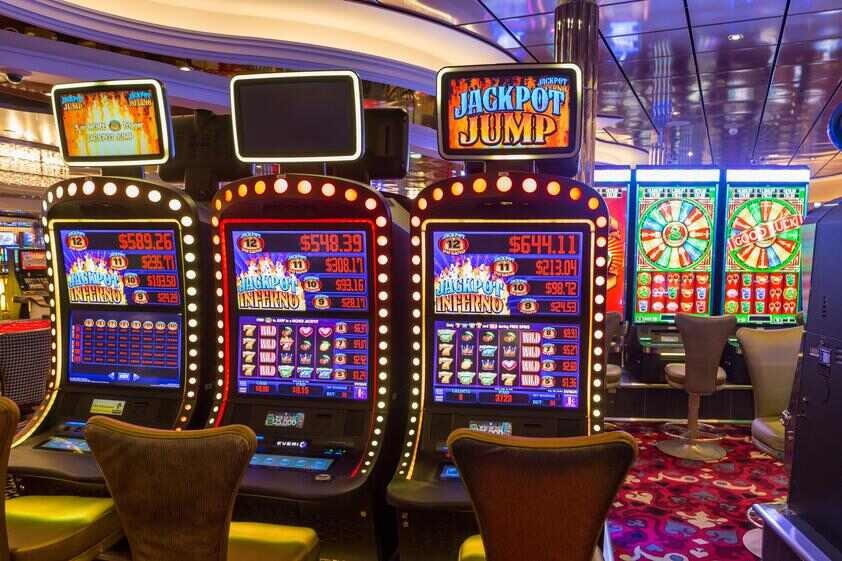
Unlike standard slot machines where the top prize is a fixed multiplier of the player’s wager, a progressive jackpot possesses a dynamic top prize that increases every time the game is played without a winner. This system is built on two foundational pillars: the seed amount and the contribution rate.
The seed amount is the guaranteed baseline of the jackpot. When a progressive prize is won, the meter does not reset to zero. Instead, it resets to the seed amount, which is entirely funded by the game developer or casino operator. This ensures that even immediately after a massive payout, the game remains attractive to new players. For premium progressive titles, this seed amount can be as high as one million dollars.
The engine that drives the jackpot upward is the contribution rate. Every time a player makes a real-money wager on the game, a predetermined percentage of that bet is immediately siphoned off and added to the cumulative prize pool. While this percentage varies by title, it typically hovers between one and five percent. Because popular games handle tens of thousands of spins per hour across the globe, these fractional contributions compound rapidly, causing the visual jackpot ticker to climb in real-time.
Categorizing Progressive Networks
Not all progressive jackpots are created equal. The size of the prize pool and the speed at which it grows are directly tied to the type of network the game is built upon. The industry generally categorizes these systems into three distinct tiers.
Standalone Progressive Jackpots
A standalone progressive is entirely localized to a single, specific game for a single player or within a single virtual machine. The jackpot only grows when bets are placed on that exact game, and it is not connected to any other titles or casinos. Because the liquidity pool is limited exclusively to the players interacting with that specific game instance, the top prizes are generally much smaller, though they tend to trigger more frequently than their larger counterparts.
Local In-House Progressives
The next tier up is the local progressive network. In this scenario, a single online casino operator links several different slot games within its own platform to a shared jackpot pool. Any player spinning the reels on any of the participating games on that specific website is contributing to the same prize pot. These jackpots can grow to substantial amounts, often reaching the tens of thousands of dollars, as the operator is pooling the liquidity of its entire active user base.
Wide-Area Network Progressives
Wide-area network progressives are the titans of the industry, responsible for the headline-making, multi-million-dollar payouts. Rather than being hosted by a single casino, these jackpots are managed by the software developers who create the games. The developer licenses the game to hundreds of different online casinos globally. When a player in New Jersey, a player in London, and a player in Toronto all spin the same popular progressive slot on three entirely different casino websites, their fractional contributions all feed into one centralized, global prize pool. This massive influx of capital allows wide-area progressives to reach astronomical figures in a relatively short amount of time.
The Mathematical Engine: Algorithms and Triggers
The most common question surrounding progressive systems is how the winner is actually determined. The answer lies in the Random Number Generator (RNG), a highly complex cryptographic algorithm continuously churning out millions of numerical sequences per second.
The RNG ensures that every single spin is an independent event, completely disconnected from the spin that occurred before it. The machine does not know how large the jackpot is, how long it has been since it last paid out, or how much a specific player has wagered over the course of a session. When the RNG lands on the precise, incredibly rare mathematical combination tied to the grand prize, the jackpot is triggered.
Game developers utilize various mechanisms to deliver this jackpot to the player.
Randomly Triggered Drops
Many modern progressives are designed to hit entirely at random, at the conclusion of any given spin. A player could theoretically place a minimum bet, fail to match any symbols on the actual slot reels, and still receive a notification that they have triggered the progressive prize. This creates a high level of suspense, as the winning moment is entirely decoupled from the standard gameplay mechanics.
Symbol-Driven Payouts
More traditional setups require the player to align a highly specific combination of symbols on a designated payline. This echoes the mechanical slot machines of the past. The odds of landing this exact sequence are mathematically programmed to match the desired rarity of the jackpot drop.
Bonus Wheel and Mini-Game Triggers
To increase entertainment value, many developers hide the progressive jackpot behind a secondary bonus game. A player might land three scatter symbols to trigger a bonus wheel. This wheel contains various segments, including smaller fixed prizes, minor jackpots, and the grand progressive prize. While the visual of the spinning wheel is thrilling, the outcome is still predetermined by the RNG at the exact millisecond the player initiated the spin.
Return to Player and the Cost of the Jackpot
Playing progressive slots involves a unique mathematical trade-off. In the online casino industry, games are measured by their Return to Player (RTP) percentage, which represents the theoretical amount of money a game will pay back to players over an infinite number of spins.
A standard non-progressive slot might boast an RTP of 96 percent. If a progressive slot also advertises a 96 percent RTP, players must realize that this number is fractured. A portion of that RTP—often around five percent—is strictly dedicated to funding the jackpot pools. Therefore, the base game being played on a regular spin-by-spin basis might operate at an effective RTP of only 91 percent.
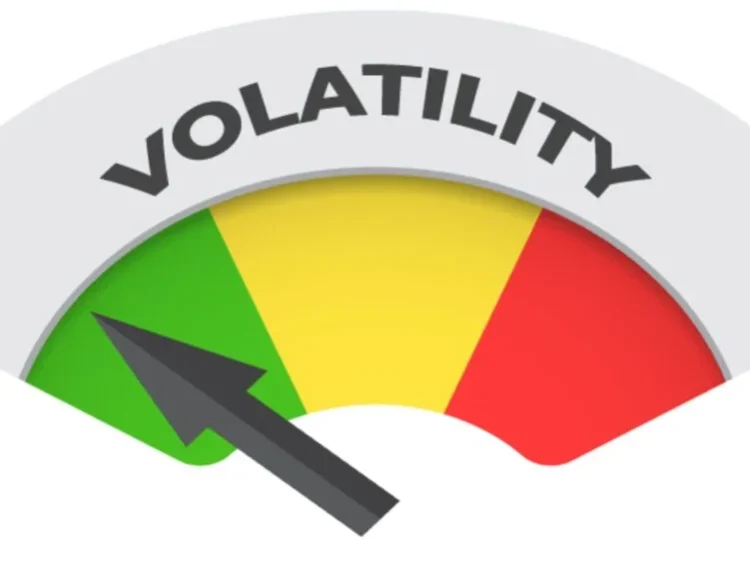
This creates an environment of extremely high volatility. Players pursuing a progressive jackpot must accept that their standard session will likely feature fewer frequent wins and faster bankroll depletion compared to a standard slot. The player is essentially paying a premium—via the lower base game RTP—for the privilege of buying a lottery ticket with every spin.
Payout Logistics and Financial Integrity
When a player overcomes the astronomical odds and hits a ten-million-dollar wide-area progressive jackpot, a common concern is whether their chosen online casino can actually afford to pay them. The reality of the financial logistics provides a reassuring safety net for the player.
For wide-area networks, the individual casino is not responsible for paying out the grand prize. Because the jackpot is pooled globally, the centralized funds are held in secure liquidity accounts by the game developer itself. When a player wins, the software provider goes through a rigorous verification process to ensure the RNG was not tampered with and that the software functioned correctly. Once verified, the software developer wires the funds directly to the winning player, completely bypassing the operating budget of the individual casino site. This structure ensures that a massive win does not bankrupt a smaller casino operator and guarantees that the player receives their windfall safely.
Qualifying for the Grand Prize
Understanding the rules of engagement is critical before interacting with any progressive system. Historically, many progressive slots featured a strict caveat: the player was only eligible to win the jackpot if they were betting the maximum possible amount. If a player hit the correct jackpot symbols while betting a lower denomination, they would receive a fixed consolation prize rather than the progressive pot.
While maximum bet requirements still exist on older titles, modern game design has largely shifted toward an equitable scaling system. Many contemporary progressives allow players to win the grand prize regardless of their bet size. However, the mathematical odds of triggering the jackpot are proportionally scaled to the wager. A player betting five dollars a spin simply has five times the mathematical probability of triggering the progressive sequence on any given spin than a player betting one dollar.
By familiarizing themselves with these underlying systems, the mathematics of the contribution rates, and the realities of high volatility, players can approach progressive slot games with a clear understanding of the risks and the true nature of the digital ecosystems powering the modern gambling industry.